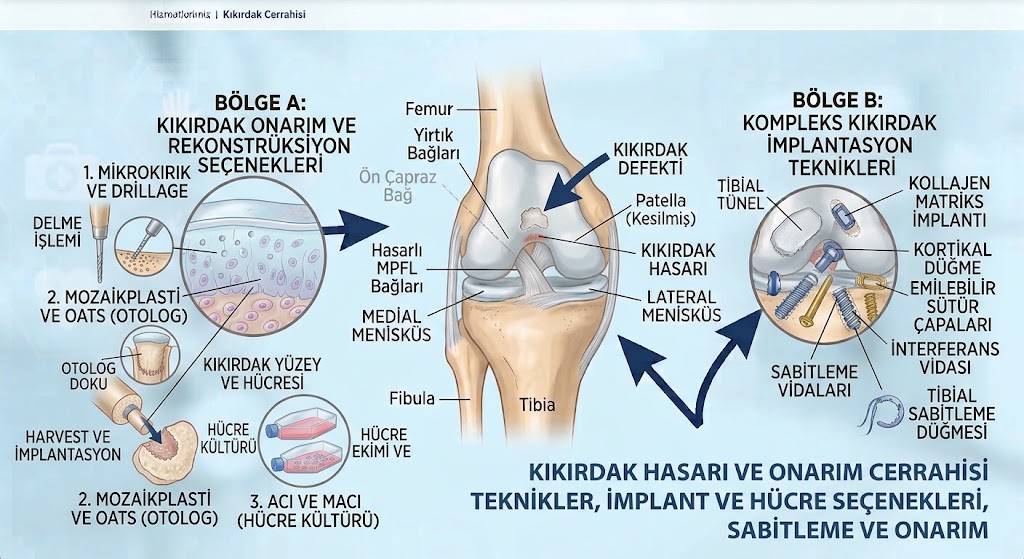
Knee Cartilage Damage (Chondral Lesion)
Last updated: 03 Eylül 2026
Damage to the cartilage tissue covering the joint surface can, if left untreated, set the stage for knee osteoarthritis.
What Is Knee Cartilage Damage?
Articular cartilage is a specialized tissue that covers the ends of bones, enabling frictionless and pain-free movement. Trauma, repetitive loading, or mechanical effects accompanying meniscus/ligament injuries can cause localized damage to this cartilage (chondral/osteochondral lesions).
What Are the Symptoms?
- Deep knee pain triggered by certain movements
- Swelling after activity
- A catching or locking sensation in the knee (if a loose cartilage fragment is present)
- Symptoms that worsen with prolonged standing or using stairs
How Is It Diagnosed?
MRI is the most valuable method for assessing the location, depth and size of cartilage damage. Definitive staging is usually done by direct visualization during arthroscopy.
Treatment Options
Small, asymptomatic lesions can be monitored. For symptomatic lesions, depending on the size of the damage, microfracture, mosaicplasty (grafting from the patient's own tissue) or cell-based cartilage repair techniques may be applied. The goal is to repair the joint surface to reduce pain and slow progressive joint damage.
This content is provided for general health information purposes only and does not replace medical diagnosis or treatment. Please consult a physician for your health concerns.
Would You Like to Book an Appointment?
Contact us for more information about this condition or to schedule an appointment.
Book Appointment